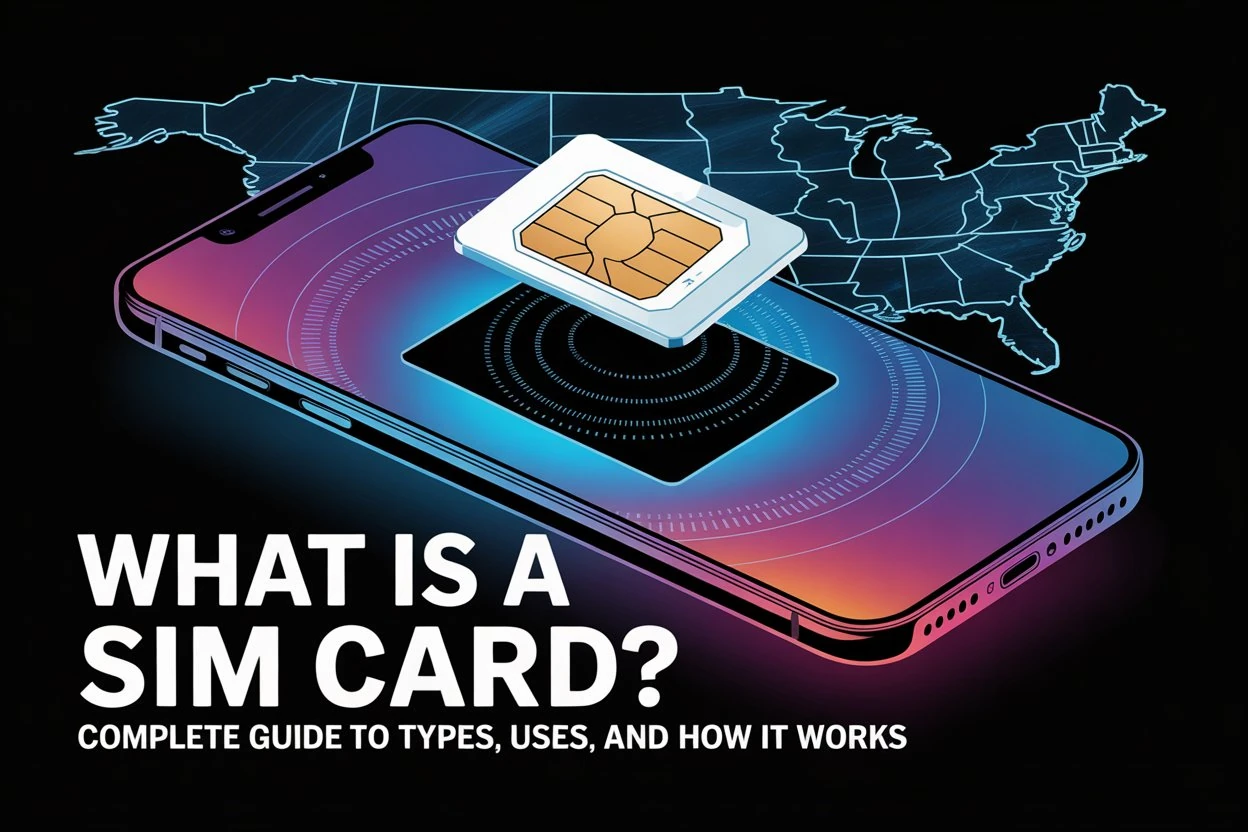
A SIM Card may be tiny, yet it plays a massive role in how your phone works every day. Without it, your smartphone cannot call, text, or connect to data networks. In simple terms, a SIM card acts as your phone’s identity, linking your device to a mobile carrier network and confirming who you are as a user.
At its core, a SIM card, also known as a Subscriber Identity Module, enables secure cellular network access through mobile network authentication. It stores unique codes that help carriers recognize your device, manage your plan, and protect your connection. Understanding how SIM cards work makes mobile technology far less mysterious.
What Is a SIM Card?
A SIM card, short for Subscriber Identity Module, is a small chip that connects your phone to a mobile carrier network. It acts like a digital passport. When you power on your phone, the SIM tells the network who you are.
In simple terms, what is a SIM card? It’s your phone’s identity. It enables cellular network access, links your number to your device, and allows calls, texts, and data to work smoothly every day.
What Does SIM Stand For and Why It Matters
SIM stands for Subscriber Identity Module, and that name explains its role perfectly. The SIM identifies you as a valid subscriber to a mobile service provider in the United States.
This identification controls billing, usage tracking, and phone number portability. When you switch phones but keep the same SIM, your number follows you. That convenience shaped modern mobile freedom.
How a SIM Card Works Inside a Mobile Network
To understand how does a SIM card work, imagine a locked door. The SIM carries the key. When your phone connects, the SIM sends its IMSI number and a SIM card authentication key to the carrier.
The carrier checks these details through mobile network authentication. If everything matches, access is granted. If not, service stops. That’s how networks prevent fraud and control access securely.
What Information Is Stored on a SIM Card
Many users ask what does a SIM card store, and the answer surprises them. A SIM does not store photos or apps. Instead, it focuses on identity and security.
SIM card storage includes the ICCID number, IMSI, network settings, and limited contacts or SMS. This data ensures correct routing of calls and texts across the mobile carrier network.
SIM Card Sizes Explained (Full, Mini, Micro, Nano)
Over time, phones shrank. SIMs followed. Understanding SIM card sizes and types helps avoid compatibility issues.
| SIM Type | Common Use Era | Notes |
| full-size SIM card | Early 1990s | Credit card sized |
| mini SIM card | 2000s | Older smartphones |
| micro SIM card | Early smartphones | Smaller frames |
| nano SIM card | Modern phones | Standard today |
Each size performs the same job. Only the plastic frame changes.
What Is an Embedded SIM (eSIM)
An embedded SIM eSIM lives inside your phone’s hardware. There’s no card to insert or remove. Activation happens digitally through QR codes or apps.
In the USA, eSIMs simplify switching carriers and support SIM card activation without store visits. Travelers especially love eSIMs for instant connectivity.
What Is an Integrated SIM (iSIM)
The integrated SIM iSIM goes one step further. It integrates directly into the phone’s processor. This saves space and power.
iSIM technology is ideal for wearables and IoT devices. While still emerging, integrated SIM iSIM signals a future where connectivity becomes invisible yet constant.
Physical SIM vs eSIM: Key Differences
The debate around physical SIM vs eSIM depends on lifestyle. Physical SIMs offer tangibility. eSIMs offer speed.
| Feature | Physical SIM | eSIM |
| Setup | Manual insertion | Digital activation |
| Switching | Requires swapping | Instant profiles |
| Durability | Can be lost | Built-in |
Both options support SIM card identification and security equally well.
Advantages of Using a SIM Card
The advantages of SIM cards remain strong despite new tech. You can switch phones quickly. Your number stays intact. Network access remains stable.
SIM cards also enable dual SIM phones, which help balance work and personal numbers. That flexibility still matters to many American users.
Disadvantages and Limitations of SIM Cards
The disadvantages of SIM cards include physical fragility and security risks. Losing a SIM can disrupt access instantly.
Another issue involves carrier locks. Some networks restrict SIM usage, limiting freedom unless unlocked by the mobile service provider.
SIM Cards and International Roaming
A SIM card for international travel allows phones to connect abroad through international roaming. However, roaming charges can spike fast.
Many travelers now prefer eSIM data plans. They avoid surprise bills while keeping their main SIM active for calls and texts.
How Dual-SIM Phones Work
Dual SIM phones support two SIM profiles at once. This can be two physical SIMs or one physical plus eSIM.
Professionals use this setup to separate work and personal calls. Travelers use it to mix local data with a home number.
How to Activate and Swap a SIM Card
SIM card activation usually happens automatically in the USA. Insert the SIM, restart the phone, and follow prompts.
Swapping SIMs is simple. Power off the phone, insert the new SIM, then restart. Your number and services follow instantly.
SIM Card Security Risks and Protection Tips
SIM card security threats exist. The most common is a SIM swapping attack, where attackers hijack your number.
Protect yourself by adding carrier PINs, enabling account alerts, and limiting public data exposure. Awareness reduces risk significantly.
“SIM security starts with the user,” notes cybersecurity experts at Norton.
How Businesses and IoT Use SIM Cards
Businesses rely on SIMs for logistics, fleet tracking, and payment terminals. IoT devices depend on SIMs for constant connectivity.
From smart meters to delivery tracking, SIMs quietly power enterprise communication nationwide.
The Future of SIM Cards and Mobile Connectivity
The future favors eSIM and iSIM adoption. Apple already removed SIM trays in US models.
Still, what is a SIM card will remain relevant. Whether physical or digital, SIM technology continues to shape mobile connectivity for years ahead.
Frequently Asked Questions
How does a SIM card actually work?
A SIM card stores your unique identity and authentication keys to connect your phone securely to a mobile carrier network.
Is a phone number attached to a SIM card?
Yes, your phone number is linked to the SIM’s IMSI number, letting carriers route calls and texts to your device.
What happens if I take out my SIM card and put it in another phone?
Your number and network access move with the SIM, so the new phone can make calls, send texts, and use data immediately.
Can a phone still operate without a SIM card?
Yes, you can use Wi-Fi and apps, but calls, texts, and mobile data won’t work without a SIM.